LED 101 / Basics
Pixel pitch
Pixel pitch is the centre-to-centre distance between pixels, in millimetres. Smaller pitch means a sharper picture up close, and more LEDs per square metre.
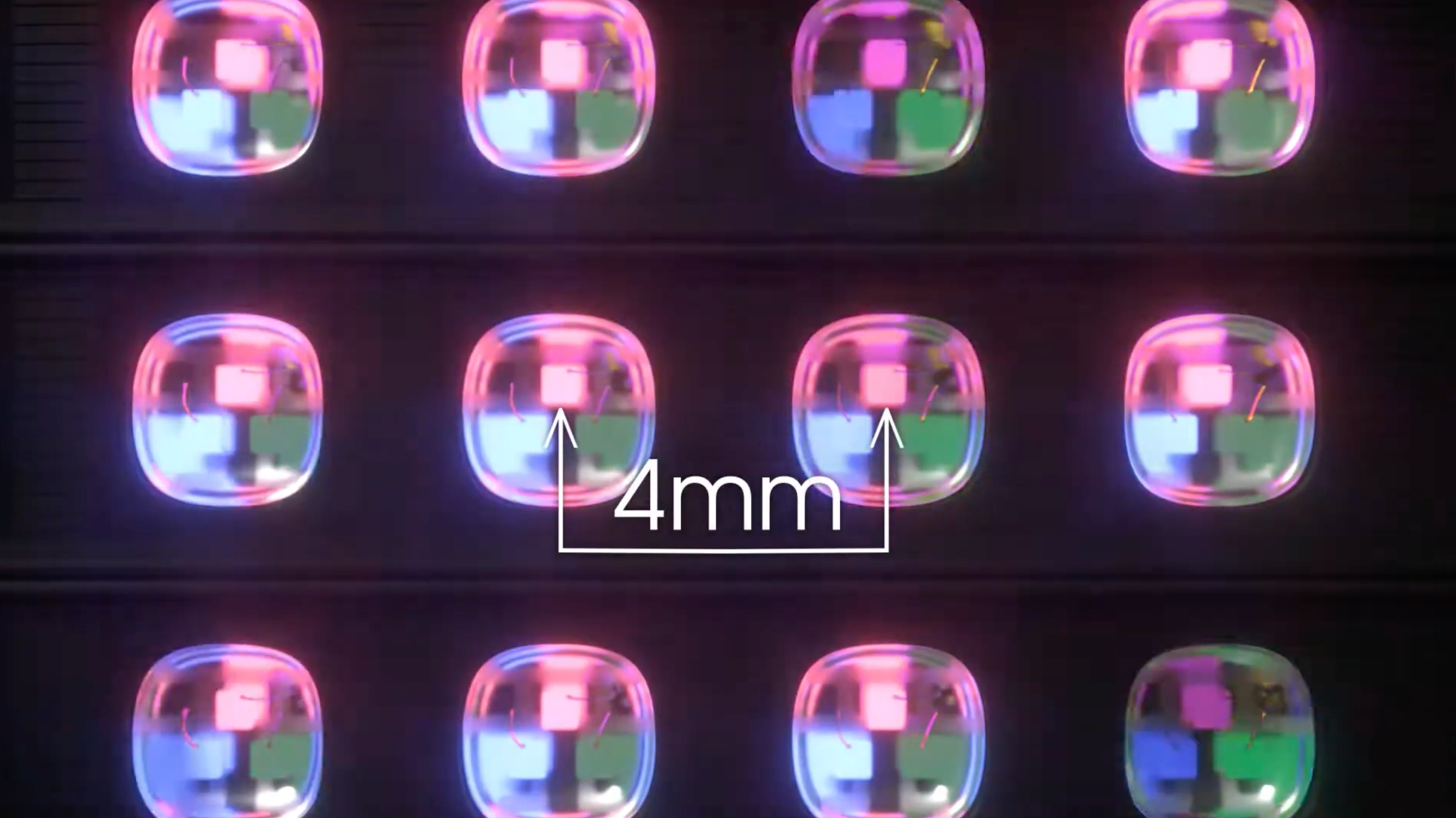
Pixel pitch is the distance from the centre of one pixel to the centre of the next, measured in millimetres. A P4 wall has four millimetres between pixel centres. A P1.2 wall has 1.2 millimetres. The letter P is shorthand for pitch.
The photo above shows a 4 mm (P4) module face with that centre-to-centre distance marked between two neighbouring pixels. The view is magnified far beyond life size so the lamps and the gap are easy to see. On a real gym or arena wall, those same 4 mm centres sit much closer together than they look here.
Tighter pitch packs more pixels into the same area, so the image holds up when people sit closer. That costs more, because you are buying more LEDs and more electronics. Wider pitch is common outdoors and in long gyms, where nobody is standing three metres from the face of the wall.
Rough ranges that show up in the field:
- P10 to P20 and wider: large outdoor signs and long throws
- P5 to P10: closer outdoor work and some gym walls
- P2.5 to P4: typical indoor gyms and large indoor walls
- P0.9 to P2: fine-pitch rooms, boardrooms, and close viewing
Pitch alone does not pick the product. Viewing distance, budget, and how the wall is used matter as much. A 4 mm gym wall that people see from the bleachers is a different problem than a 1.2 mm boardroom wall.